EV Tire Matcher
Enter your electric vehicle model — see recommended tire size, load index, and EV-specific options.
All data stays in your browser — we never see it.
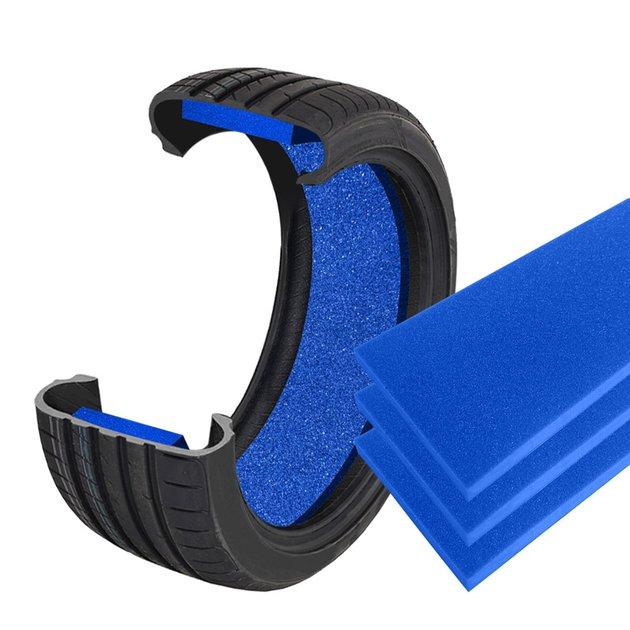
I had Jenna plug in her Ioniq 5. The tool recommended tires with a higher load index – 102 instead of 98 – and a tread compound designed for high torque. It also showed her tires with acoustic foam inside the tread. That foam reduces cavity resonance – the drum sound that happens when air vibrates inside the tire. On a gas car, you don’t hear it. On an EV, you do. She ordered a set of Hankook iON evo AS tires. Cost her $1,100 for all four. The tire shop that installed them said they’d never seen that model before. That’s a problem. Tire shops are still learning. Jenna called me after driving on the new tires. “It’s quieter,” she said. “And the range is better.” She hadn’t even been tracking range. She just noticed she was charging less often. That’s another thing about EV tires. They have lower rolling resistance. A standard tire flexes more, which creates heat and wastes energy. An EV tire has stiffer sidewalls and a tread compound that generates less friction. That adds 3-5% to your range. On a 300-mile car, that’s 9-15 miles. Not huge. But it adds up. The Tire Load Index Calculator is critical for EV owners.Tire Load Index Calculator
Enter your tire size and load index — see maximum weight per tire and recommended load for your vehicle.
All data stays in your browser — we never see it.
An EV is heavy. A Model 3 Long Range weighs about 4,100 pounds. That’s 500 pounds more than a BMW 3 Series. A Ford F-150 Lightning weighs 6,500 pounds – almost a ton more than a gas F-150. The tires have to carry that weight every mile. A standard passenger tire with a load index of 94 might be fine on a gas sedan. On an EV, you need 98 or higher. The load index calculator shows you the numbers. I had a customer with a Rivian R1T. He put 20-inch aftermarket wheels with standard light-truck tires on it. The tires had a load index of 115. The Rivian needed 120. He was running 5% under capacity. Not terrible, but not safe. The truck weighs over 7,000 pounds. He towed a camper. The rear tires were working hard. I showed him the calculator. He sold the wheels and bought proper EV-rated tires. The Tire Size Comparator can help you see the difference between EV tires and standard tires.Tire Size Comparator
Compare two tire sizes side by side — see diameter, width, sidewall, and revs per mile.
All data stays in your browser — we never see it.
Jenna compared her old standard tires to the new EV tires. The size was the same. The diameter was the same. The comparator showed identical numbers. But the internal construction was different. The comparator doesn’t show that. That’s why you need the EV Tire Matcher. The tire industry has adopted new labeling for EV tires. Look for “EV” on the sidewall. Or “Elect” for Michelin. Or “T0” for Tesla original equipment. If you don’t see something EV-specific, it’s a standard tire. It will work. It just won’t work as well. I remember a guy named Mike. He leased a Polestar 2. The lease required him to return the car with the original tire type – EV-specific. He bought cheap standard tires to save money. The lease inspection caught it. They charged him $1,200 to replace all four with the correct tires. He saved $200 and lost $1,200. Not a smart trade. The Gear Ratio Calculator isn’t EV-specific, but if you change tire diameter on an EV, it affects range and speedometer accuracy just like a gas car.Gear Ratio Calculator
Enter your tire size, gear ratio, and transmission — see engine RPM at highway speed and recommended gear ratio for your tire size.
All data stays in your browser — we never see it.
EVs don’t have transmissions in the same way, but they do have fixed reduction gears. Changing tire diameter changes motor RPM at a given speed. That affects efficiency. A 3% larger tire might reduce range by 2%. A 3% smaller tire might increase motor speed and reduce range by 3%. Stick close to stock diameter. Jenna’s Ioniq 5 now has 25,000 miles on the EV tires. The tread is wearing evenly. The ride is quiet. She’s on track to get 40,000 miles from the set – not great, but better than the 15,000 she got from the standard tires. She told me “I should have done this from the start.” If you drive an EV, do three things. First, check your door jamb sticker for the recommended tire size and load index. Don’t downgrade. Second, look for EV-specific tires when it’s time to replace. They cost more upfront. They save you money in the long run through longer tread life, better range, and less noise. Third, rotate your tires every 5,000 miles. EVs eat rear tires because of regenerative braking and torque. Front tires wear too, but not as fast. Rotating evens it out. The EV Tire Matcher is free. Use it before you buy. Not after. Jenna learned that lesson. She’s now the one telling her EV friends to check their tires. “I feel like a tire nerd,” she said. “But I also feel like I know something most people don’t.” She does.