EV Tire Matcher
Enter your electric vehicle model — see recommended tire size, load index, and EV-specific options.
All data stays in your browser — we never see it.
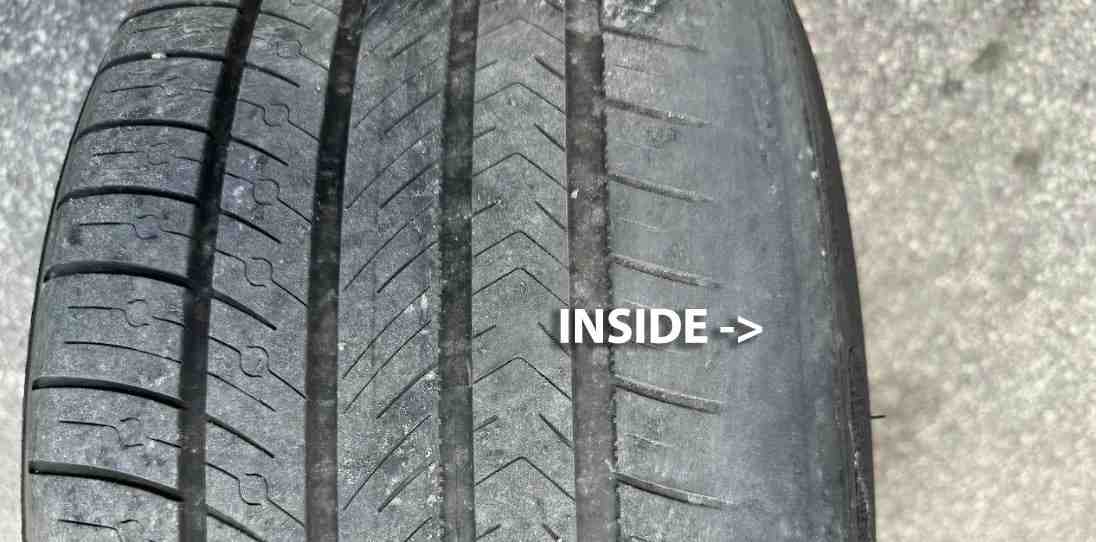
I had Mark plug in his Model 3 year and trim. The tool showed him three recommended tires. All had a higher load index than standard tires – 98 or 100 instead of 94. All had reinforced sidewalls to handle the extra weight. Two had acoustic foam inside to reduce road noise, because EVs don’t have engine noise to mask tire hum. Mark asked if he really needed the EV-specific tires. I told him the truth: no, not legally. But if he wanted his tires to last more than 15,000 miles and if he didn’t want his car to sound like a Jeep on mud terrains, yes. He ordered a set of Michelin Pilot Sport EV tires. Cost him about $1,200 for all four, mounted and balanced. The shop that installed them specialized in EVs. They did a laser alignment and found that the rear toe was off by almost half a degree – another contributor to the inner edge wear. They fixed it. Mark called me a month later. “The car drives quieter. The ride is better. And I’m not sliding through corners anymore.” That last part was interesting. He hadn’t mentioned traction issues before. But the standard tires, with their lower load rating, had been flexing more under cornering. The stiffer sidewalls of the EV tires gave him better feedback and grip. The Tire Load Index Calculator can show you the weight difference.Tire Load Index Calculator
Enter your tire size and load index — see maximum weight per tire and recommended load for your vehicle.
All data stays in your browser — we never see it.
I ran Mark’s numbers. The standard tires had a load index of 94, which is about 1,477 pounds per tire. Times four is 5,908 pounds total capacity. The Model 3 weighs 4,100 plus passengers and cargo – call it 4,500 pounds. That’s 1,408 pounds per tire on average. The tires were operating at about 95% of their capacity. That’s fine. But the rear axle carries more weight than the front, especially under acceleration. The instant torque of the electric motor puts even more strain on the rear tires. That’s why his rears wore out first. The EV-specific tires have a load index of 98 – about 1,653 pounds per tire. That’s a 12% increase in capacity. They’re designed for the weight. They also have tread compounds formulated for high torque applications. They won’t turn into gum under heavy acceleration the way standard tires can. Mark’s story is becoming more common. EVs now make up about 8% of vehicles on the road in the US. The number is growing. Tire shops are struggling to keep up. Many don’t stock EV-specific tires. Some don’t even know they exist. I’ve heard stories of Tesla owners being told “any tire that fits will work.” That’s like saying any gas will work in a Ferrari. Technically true. But you wouldn’t put 87 octane in a car that requires 93. You wouldn’t put all-season tires on a track car. So why would you put standard tires on an EV? The Tire Size Comparator can help you see the difference between EV and standard tires.Tire Size Comparator
Compare two tire sizes side by side — see diameter, width, sidewall, and revs per mile.
All data stays in your browser — we never see it.
Mark compared the standard Michelin Pilot Sport 4S (size 235/40R19) to the EV version of the same tire. The dimensions were identical. The difference was internal: load index, sidewall construction, and acoustic foam. The comparator showed that the EV tire had a higher load index and lower rolling resistance – both important for range. He didn’t know about rolling resistance before. Neither did I, until I started researching EV tires. A tire with lower rolling resistance can increase an EV’s range by 3-5%. That’s not nothing. On a car with 300 miles of range, that’s an extra 9-15 miles. Not life-changing. But over the life of the tire, it adds up. A couple of months after Mark got his new tires, I asked him how they were holding up. He said the wear looked even. The alignment fixed the inner edge issue. And the acoustic foam made a noticeable difference on the highway. “I didn’t realize how much tire noise I was hearing until it was gone,” he said. I asked if he’d recommend EV-specific tires to other Tesla owners. He said “absolutely. But I wouldn’t trust a regular tire shop to know the difference. You have to do your own research.” That’s the takeaway. The tire industry is catching up, but it’s not there yet. Many shops still treat EVs like any other car. They’re not. They’re heavier. They have more torque. They need special tires. If you drive an EV, check your tire sidewall. Look for “EV” or “Elect” or “T0” (Tesla’s code). If you don’t see something indicating EV-specific construction, you’re probably running standard tires. They’ll work. But they won’t last as long, and they might not perform as well. The EV Tire Matcher is free. Use it before you buy. Not after. Mark’s Model 3 now has 30,000 miles on it. The EV-specific tires have 18,000 miles on them. He’s rotated them twice. They still have about 6/32 of tread left – maybe another 10,000 miles. That’s about 28,000 miles on a set of tires. Not great compared to a Camry. But way better than the 12,000 he got from the standard ones. “I’m a believer,” he told me. “I just wish I knew this before I bought the car.”