Tire Size Calculator
Enter your tire size — see sidewall height, diameter, and revs per mile.
All data stays in your browser — we never see it.
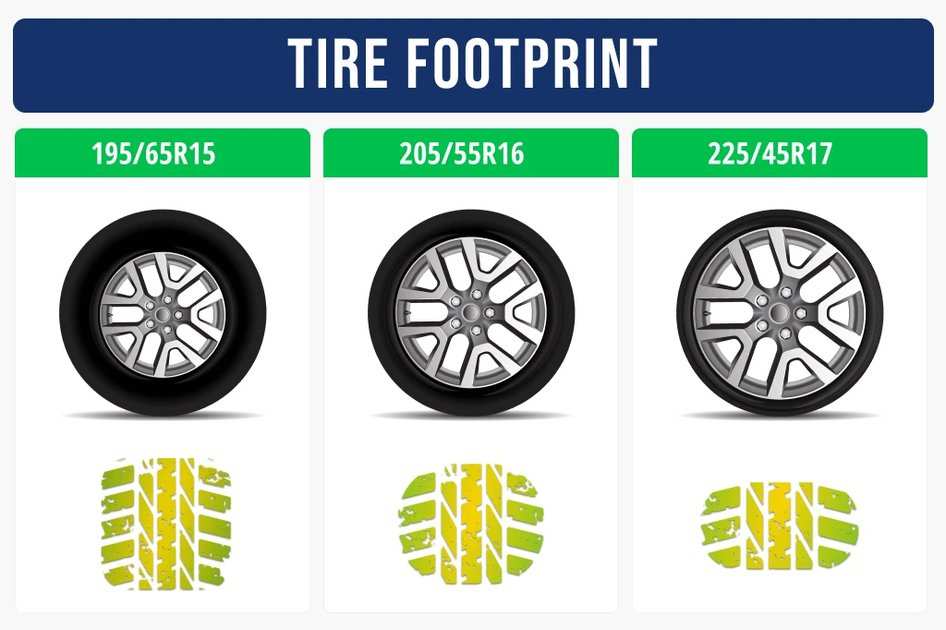
We plugged in his stock 215/55R17. Sidewall height: about 4.6 inches. Then his new 225/45R17. Sidewall: about 3.9 inches. That's a loss of 0.7 inches of rubber. Doesn't sound like much. But that 0.7 inches is the only thing between the wheel and the road. Less sidewall means less flex. Less flex means more vibration transmitted to the chassis. More vibration means a rougher ride. Tony was about to sell the car out of frustration. I convinced him to try a different approach: 215/50R17. That's a 50 aspect ratio – halfway between his stock 55 and his too‑low 45. The sidewall would be about 4.2 inches. The ride would be firmer than stock but not punishing. The speedometer error would be about 1%. He bought a set. He loved them. He kept the car. The Tire Size Comparator can help you compare sidewall heights visually.Tire Size Comparator
Compare two tire sizes side by side — see diameter, width, sidewall, and revs per mile.
All data stays in your browser — we never see it.
Tony used the comparator to see the 215/55R17 vs the 215/50R17. The sidewall difference was clear. The 50‑series was visibly shorter. But the ride quality difference was acceptable. The 45‑series was too much. So what does aspect ratio actually do? A lower aspect ratio means shorter sidewall. Shorter sidewall means less flex. Less flex means the tire responds to steering inputs faster. That's why sports cars run low aspect ratios – 35, 30, even 25 series. The tire doesn't squirm. The steering feels direct. Turn the wheel, the car turns instantly. But less flex also means less absorption. Road imperfections aren't filtered. You feel the cracks. You feel the expansion joints. You feel the gravel. That's fine on a smooth racetrack. It's terrible on Michigan highways. A higher aspect ratio – 65, 70, 75 – means tall sidewall. Tall sidewall flexes more. It acts like a second suspension. It absorbs bumps. That's why trucks and SUVs run tall sidewalls. Comfort, not handling. Also, tall sidewalls protect wheels from pothole damage. A low‑profile tire on a 20‑inch wheel will dent the rim on a hard hit. A tall sidewall on a 17‑inch wheel will bounce over the same pothole without damage. Tony's 45‑series tires were only half an inch shorter than stock – about 2% difference. Acceptable. But the ride quality change was dramatic. That's because the sidewall was not just shorter – it was stiffer. Lower aspect ratio tires often have stiffer sidewalls to maintain handling. That stiffness transfers more road feel. Good for cornering. Bad for potholes. Another thing aspect ratio affects: rolling resistance. A taller sidewall tire flexes more, which creates more heat and more energy loss. That means slightly lower fuel economy. A 60‑series tire might cost you 1‑2% more fuel than a 45‑series. Not a huge difference, but noticeable over time. A friend of mine with a Prius switched from 65‑series to 55‑series for “better handling.” He lost about 2 miles per gallon. That's a lot for a Prius. He switched back. Here's a practical guide to aspect ratio choices. For a daily driver on rough roads: stick with the factory aspect ratio or go up. A 65‑series or 70‑series will ride like a cloud. For a sedan on decent roads: 55‑series is a good balance of comfort and handling. 50‑series is slightly sportier but still livable. For a sports car: 45‑series and lower. But you'll feel the road. That's the point. For a truck or SUV that tows: stay with the factory aspect ratio. Don't go lower. The sidewall flex helps with load distribution. For off-road use: tall sidewall is your friend. A 75‑series or 85‑series tire can be aired down for sand or rocks. A low‑profile tire will get shredded. I remember a guy with a lifted Wrangler who put 20‑inch wheels with 35‑series tires on it. He complained about the ride. I asked why he did it. “Looks,” he said. I pointed at the trail scrapes on his side steps. “You actually off‑road this thing?” He said yes. I explained that low‑profile tires have no sidewall to flex when aired down. He'd be stuck on the first rocky trail. He kept the 20s for street driving and bought a second set of 17‑inch wheels with 75‑series mud tires for off‑road. Smart move. Tony eventually sold his Accord and bought a Civic Si. The Si came with 45‑series tires from the factory. He was fine with the ride because he knew what to expect. He told me “I wouldn't have bought the Si if I hadn't tried those 45‑series tires on the Accord first. I learned that low profile isn't bad – it's just different.” That's the key. Aspect ratio isn't good or bad. It's a choice. A trade‑off between comfort and response. Between pothole survival and steering crispness. Between off‑road capability and highway stability. Know what you're trading. Then choose.